

Soil Fertility

For more than 20 years, AGT’s Soil Fertility team has been supporting farmers and their advisors by drawing on the latest scientific knowledge in this field.
To help them manage their soil capital as effectively as possible, the team explains and demonstrates—through concrete examples, often directly in the field—the consequences of farming practices on soil condition and functioning. It provides diagnostic tools and preventive approaches to adapt cropping system management over the medium and long term.
The challenge: to gain greater autonomy and production efficiency, and to adapt to climatic and economic uncertainties.
Our expertise for your projects
Managing soil organic status over the long term
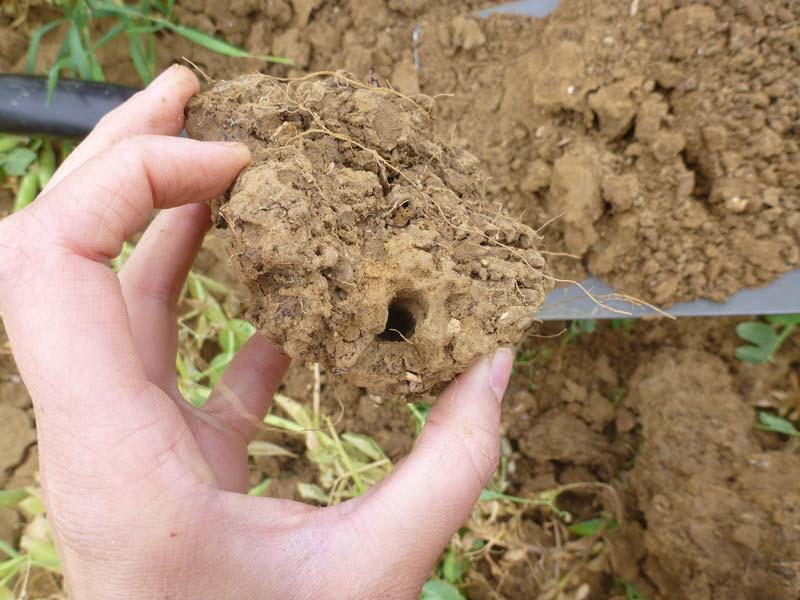
The organic status of a soil evolves slowly and is hardly perceptible in the short term. Yet it is a cornerstone of the functional balance of cultivated soils. Biological activity and chemical and physical fertility are closely linked to it. Being able to understand and anticipate the effects of a cropping system or new practices you are considering, on the evolution of organic matter or the stock of soil organic carbon, is what our team offers.
To achieve this, the team has developed a simulation tool, Simeos-AMG, based on the INRAE AMG humus balance model. Our expertise relies in particular on an in-depth knowledge of this model, which we have been helping to improve for nearly 20 years. It is also strengthened by extensive experience in its application, not only to agricultural systems in our region, but also to those in the main arable farming regions of France and beyond.
Towards sustainable management of soil physical fertility: preventing compaction risks and their agronomic and environmental consequences
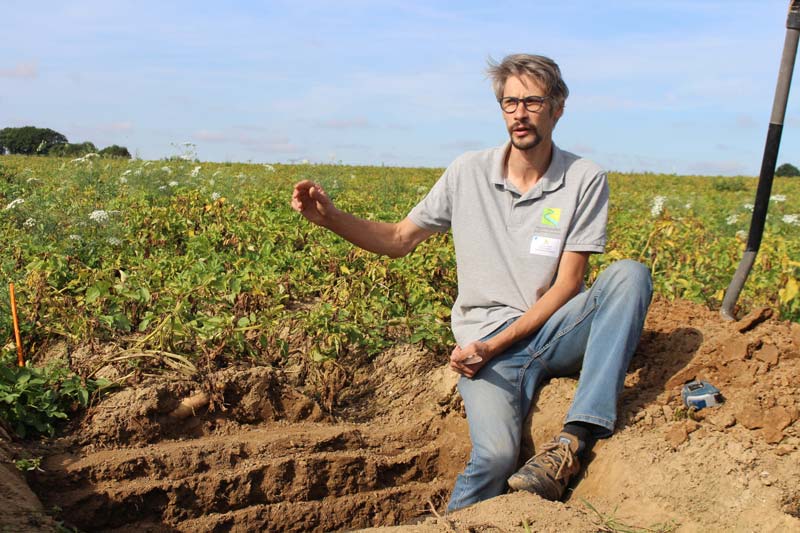
Intensive farming systems in our region increasingly rely on heavier harvesting, planting and spreading equipment. Having been aware from an early stage of the high risk of soil structure degradation caused by compaction, we have been able to measure its concrete short- and medium-term consequences: crop productivity and soil functioning are affected, and the risk of runoff and erosion increases.
We have been developing our expertise on this topic, as well as diagnostic, advisory tools and methods, for nearly 15 years. They enable us to support you effectively and pragmatically in identifying these risks, anticipating them, and optimising operational choices in order to preserve this essential component of soil fertility.
Towards Soil Conservation systems
For several years, the AGT team has been exploring the benefits of practices promoted by Soil Conservation Agriculture or Regenerative Agriculture systems*. It is also aware of the barriers that limit their widespread adoption and adaptation on farms in our region. On several issues (e.g. nitrogen management or weed control), questions and controversies remain.
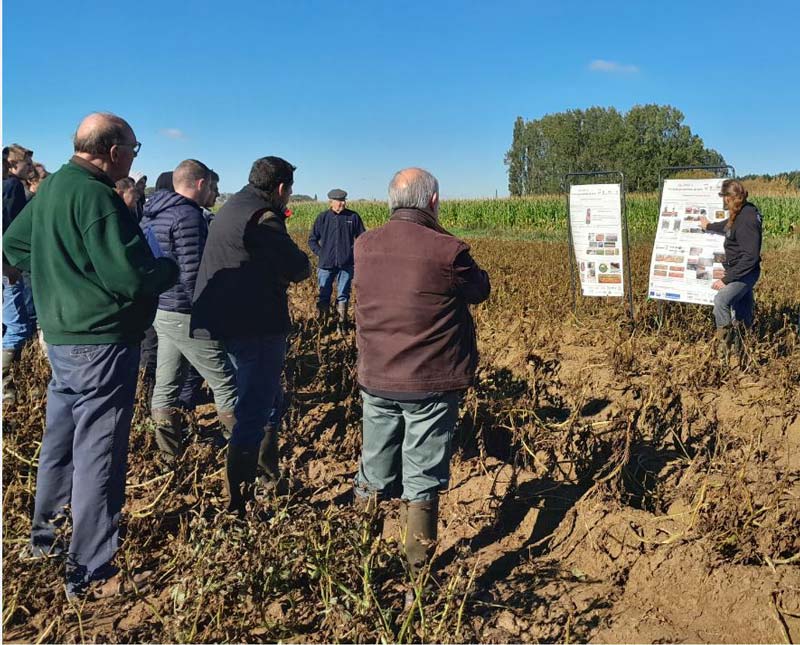
To provide well-founded and tangible answers, the team conducts multi-year, full-scale experiments with farmers in the Hauts-de-France region, directly in their fields. The new knowledge and technical references generated by these projects enrich our experience and enable us to help advisors support farmers step by step through this transition.
* Agricultural systems aiming at “soil regeneration” and involving agricultural value chains in financing the transition process.
Do you have a project?
Let’s talk about it. Our experts are here to help you move from idea to action.
Contact : a.duparque@agro-transfert-rt.org